
.png)
For years, India's Generation Z has been the subject of easy stereotypes. They have been described as digitally addicted, politically indifferent, obsessed with aesthetics over substance, and more comfortable curating identities online than confronting the realities of the world outside their screens. To many Baby Boomers, Generation X, and even Millennials, they appeared to be the first generation raised almost entirely by algorithms—hyperconnected yet socially fragmented, expressive yet disengaged.
The youth-led resistance that emerged around the Jantar Mantar protests challenged that assumption in dramatic fashion.
What surprised many observers was not merely that thousands of young people mobilized around issues of examination paper leaks, unemployment, and institutional accountability. The real surprise was that a generation presumed to be apathetic demonstrated an extraordinarycapacity for political imagination, collective organization, and sustained resistance.
Anthropologically, the movement represents something far more significant: the moment when India's Gen Z crossed the threshold from being passive observers of democracy to active participants in shaping its future.
So what galvanised this generation?
At first, many young people appeared content to express solidarity from a distance. In Sonam Wangchuk and the students fasting alongside him, they found figures through whom they could channel their own anxieties and aspirations without yet becoming physically present themselves. To many observers, this seemed to confirm familiar assumptions about Gen Z as politically cautious, fragmented, and more comfortable engaging through digital platforms than through collective action.
Yet beneath that apparent distance, something more significant was unfolding. Social media was not replacing political engagement; it was incubating it. Networks of sympathy, frustration and shared experience were quietly accumulating, waiting for a moment that would transform online identification into public mobilisation.
That moment arrived through two critical developments.
The first was the government'sapparent decision to treat the protest as one more episode in the fast-movingcycle of digital attention. Like many contemporary controversies, it may have been assumed that public interest would gradually dissipate as social media moved on to the next trend, controversy or distraction.
The second—and ultimately more consequential—was the removal of Wangchuk from the protest site. Beyond its immediate political significance, the manner of his removal acquired profound symbolic meaning. It transformed what had been an issue that many young people observed from a distance into one they increasingly experienced as their own.
By this stage, Wangchuk had come to represent far more than an individual activist. He embodied a generation'sgrowing unease about educational uncertainty, shrinking opportunities, unemployment and the responsiveness of public institutions. At the same time, he represented the belief that peaceful, disciplined civic engagement could still command attention and produce meaningful democratic dialogue.

His removal therefore resonated far beyond the fate of a single protester. For many young observers, it appeared to signal that the concerns he had come to embody could themselves be dismissed. If a peaceful appeal for accountability could be removed so readily, what did that imply about the value placed on the aspirations of those whose futures depended upon those institutions?
For a generation already living with uncertainty, that dismissal became unexpectedly unifying. Individual frustration gave way to a shared sense that silence was no longer an option. The protest ceased to be about supporting someone else; it became about defending their own futures.
The return to physical community
Equally transformative was the experience of collective presence.
Gen Z is the first generation to grow up almost entirely in digital spaces. Friendships, identities, humour, activism, entertainment, and even emotional intimacy have largely been mediated through screens. Digital platforms have undoubtedly expanded opportunities for expression. Yet they also fragment experience. They create communities that are immediate but often transient, emotionally intense but physically absent.
The protests at Jantar Mantar bridged the virtual and the physical. Participants discovered that citizenship is experienced differently when voices are heard collectively rather than expressed individually through screens. What had begun as dispersed digital solidarity became a community capable of acting together.
The same generation that had learned to organise through hashtags, memes, reels, and online communities discovered the emotional force of occupying shared physical space. Standing shoulder to shoulder with strangers, chanting together, debating together, sleeping under the same tents, and sharing food transformed online solidarity into embodied solidarity.
Anthropologist Émile Durkheim described this phenomenon as collective effervescence—the intense emotional energy generated when individuals gather around a shared moral purpose. It is one of the oldest forces through which societies create belonging and identity.
For many participants, this may have been their first experience of such collective power.
In that sense, the movement did not simply challenge political institutions. It marked a psychological and civic transition for an entire generation. Young people who had grown up navigating public life largely through digital spaces experienced, perhaps for the first time, the emotional force of collective democratic participation. The protest became not only an expression of political dissent, but also the moment in which many members of India’s Gen Z discovered their own political agency.
It also changed how Gen Z saw itself.
India’s older generations often draw identity from the Independence Movement, the Emergency, economic liberalisation, or other political milestones. Gen Z inherited none of these. They were born into an India where democracy was already assumed to exist rather than something that had to be defended.
During the protest, many young participants experienced, perhaps for the first time, what it means to believe that citizenship involves responsibility rather than mere entitlement. The protest became a civic classroom.
It also temporarily dissolved social divisions. Participants repeatedly described spaces where religion, caste, class, region, language, and urban-rural differences became secondary to a shared experience of uncertainty about the future. Shared frustration became shared identity.
The slogan ‘Hindu-Muslim razi, to kya karega Nazi?’ captured more than political criticism. It expressed an aspiration for solidarity over division and suggested that many young participants were searching for forms of citizenship that transcended inherited identities.
Anthropologically, protest sites often function as temporary societies. They become spaces where people rehearse alternative possibilities of living together.
From being judged to being heard
Gen Z often occupies a paradoxical position in Indian society. It is constantly evaluated yet rarely listened to.
Older generations critique their work ethic, attention span, social media habits, emotional vocabulary, and perceived lack of resilience. Young people are expected to inherit the consequences of decisions made before they were born while having limited influence over shaping those decisions. The protest altered that dynamic.
For perhaps the first time, many young participants experienced being taken seriously—not because of examination scores or professional achievements, but because their collective voice demanded attention.
Anthropologically, this matters enormously. Communities require acknowledgement as much as they require resources. To be seen is itself a form of social justice. Many participants describe leaving the movement with a renewed sense that their experiences mattered.

The movement also disrupted assumptions about intergenerational relationships. Although initiated by young people, it gradually attracted support from parents, teachers, academics, lawyers, artists, and members of older generations. Many parents who had encouraged caution throughout their lives found themselves standing beside children demanding accountability.
In an age where digital technologies often isolate individuals into personalised realities, the movement expanded community.
Inventing a new language of resistance
Every social movement develops its own cultural vocabulary. This one did too. Satire became one of its most powerful political tools. Humour transformed anger into creativity. Memes became political commentary. Songs became acts of solidarity. Street theatre, dancing, music, and performance prevented protest from becoming merely an expression of despair.
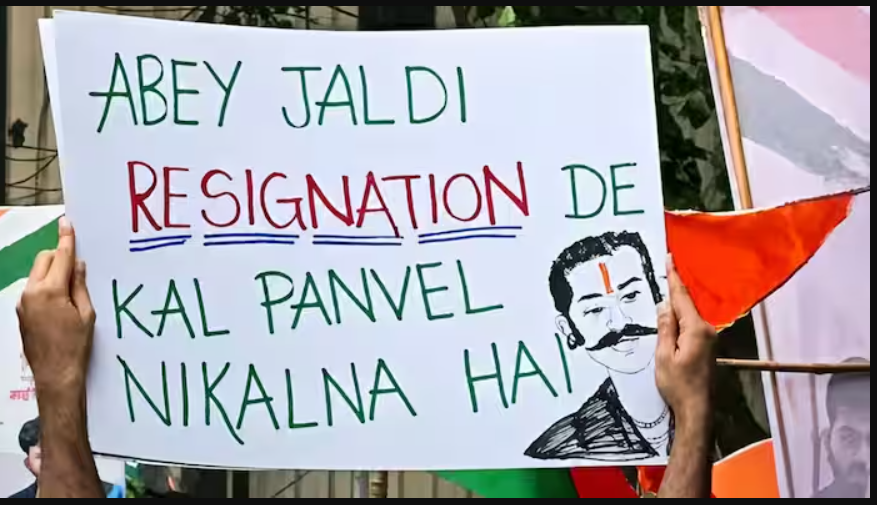
Resistance became cultural production. This reflects an important characteristic of Gen Z globally. Unlike previous generations that often separated politics from popular culture, Gen Z blends the two seamlessly. Entertainment becomes activism. Irony becomes critique. Creativity becomes resistance. Far from trivialising politics, these cultural forms often broaden participation by making difficult conversations emotionally accessible.
A democratic coming of age
Ultimately, the significance of the Jantar Mantar protests may not lie in specific policy outcomes. Their deeper legacy is generational. They demonstrated that India’s youngest adults possess the capacity for sustained civic engagement, collective imagination, and democratic participation.
They reminded older generations that digital natives are also citizens, while showing young people that democracy is not something governments alone produce but something citizens continually create. They offered Gen Z an experience that no algorithm could simulate, the idea that individual frustration could become collective purpose.
History often remembers protests for the governments they challenge; anthropology remembers them for the people they transform.
From that perspective, the Jantar Mantar movement may represent something far greater than a single episode of public dissent. It may mark the political coming of age of India’s Generation Z—a generation long dismissed as disconnected, but which, when presented with a cause that spoke to its future, discovered not only its voice but also its power.
It proved that beneath the stereotypes of screen addiction and political disengagement lies a deep reservoir of civic energy. The question is no longer whether Gen Z cares. The question is what kind of India this generation now seeks to build.
